Elegant and highly decorative, this rare 20th Century mirror by Pio Zanotti showcases the refined artistry of Italian marquetry at its finest. Crafted in veneered wood with marquetry decoration, the frame is meticulously inlaid with a striking geometric frieze composed of interlocking diamond motifs, alternating between light and dark wood tones to create depth, rhythm, and visual sophistication.
This piece is distinguished by a composition with intricate interlacing motifs. The precision of the craftsmanship highlights Zanotti’s mastery of form, balance, and ornamental detail, making these mirrors unique items to posess.
Provenance:
Pio Zanotti collection and by descent
Born in 1904 in Mongrando, in northern Piedmont, Italy, Pio Zanotti trained in Biella before opening his first cabinetmaking workshop in his hometown in 1926. There, he produced the woodwork for the choir of the Church of San Rocco. In Mongrando, Zanotti became the exclusive licensee of a patented chemical wood-bending technique. Following the method developed by Thonet at the end of the 19th century, this process uses a chemical treatment to transform hard wood into a malleable and flexible material without the need for special tools. The wood can be shaped cold into any curve or form, then heated for one to two days depending on its thickness, after which it regains its natural rigidity. This method allows for significant savings in both time and material, as curved elements no longer need to be carved directly from solid wood. The technique is used for boat hulls, furniture, and even sports equipment. Similar research was carried out in Finland by Alvar Aalto with his laminated birch bending process in the late 1930s.
In 1931, Pio Zanotti traveled to Paris to visit the International Colonial Exhibition, where furniture by Ruhlmann, Printz, and Subes was presented at the Palais de la Porte Dorée. In 1932, he established a craft cabinetmaking workshop in Asnières, and in 1947 he founded the company Ébénisterie Moderne in Bois-Colombes. Relocated in 1950 to Argenteuil in a former textile factory, the company renamed Société Industrielle et Technique d’Application du Bois (SITAB) specialized in the production of furniture for radios, televisions, and hi-fi systems. Within ten years, its workforce grew from 50 to 300 employees. The company also developed production of seating, furniture, and office equipment. Its activities later expanded to include mass production of kitchen and bathroom furniture, outfitting major international hotels such as the El Aurassi Hotel in Algiers and Mercure chain hotels, as well as furnishing ski resorts like Tignes, Val d’Isère, and Val Thorens. During the reconstruction period, the factory was equipped with the most modern machinery, and its workflow was organized around a rational system designed to efficiently link each stage of production. Zanotti collaborated with several designers and decorators, including Pierre Paulin, Joseph-André Motte, Robert Sentou, and the German company Flötotto, known for its modular mass-produced furniture.
In the early 1960s, Pio Zanotti designed the interior of the house he built in Le Vésinet, designed by architect Jean Marie. In contrast to cold, minimalist modernism, he created a warm atmosphere in keeping with mid-century spirit, highlighting wood in its many forms: rosewood paneling, elm coffered ceilings, hexagonal marquetry parquet flooring, solid wood interior joinery, and exterior screens. A majestic spiral staircase with a central stringer, made from various wood species and supported by an elegant slender post, extends the flowing movement of the mezzanine and serves as the centerpiece of the house.
After retiring in 1978, Pio Zanotti devoted himself to producing small marquetry objects boxes, vases, frames, and mirrors as well as furniture. His works remain faithful to the spirit of Italian design from the 1940s and 1950s, as represented by Gio Ponti, Pietro Chiesa, Carlo Mollino, and Paolo Buffa: formal elegance, clean lines, and modern forms.
Dimensions:
height: 40cm
Width: 42cm
Depth: 2.5cm
Elegant and highly decorative, this rare 20th Century mirror by Pio Zanotti showcases the refined artistry of Italian marquetry at its finest. Crafted in veneered wood with marquetry decoration, the frame is meticulously inlaid with a striking geometric frieze composed of interlocking diamond motifs, alternating between light and dark wood tones to create depth, rhythm, and visual sophistication.
This piece is distinguished by a composition with intricate interlacing motifs. The precision of the craftsmanship highlights Zanotti’s mastery of form, balance, and ornamental detail, making these mirrors unique items to posess.
Provenance:
Pio Zanotti collection and by descent
Born in 1904 in Mongrando, in northern Piedmont, Italy, Pio Zanotti trained in Biella before opening his first cabinetmaking workshop in his hometown in 1926. There, he produced the woodwork for the choir of the Church of San Rocco. In Mongrando, Zanotti became the exclusive licensee of a patented chemical wood-bending technique. Following the method developed by Thonet at the end of the 19th century, this process uses a chemical treatment to transform hard wood into a malleable and flexible material without the need for special tools. The wood can be shaped cold into any curve or form, then heated for one to two days depending on its thickness, after which it regains its natural rigidity. This method allows for significant savings in both time and material, as curved elements no longer need to be carved directly from solid wood. The technique is used for boat hulls, furniture, and even sports equipment. Similar research was carried out in Finland by Alvar Aalto with his laminated birch bending process in the late 1930s.
In 1931, Pio Zanotti traveled to Paris to visit the International Colonial Exhibition, where furniture by Ruhlmann, Printz, and Subes was presented at the Palais de la Porte Dorée. In 1932, he established a craft cabinetmaking workshop in Asnières, and in 1947 he founded the company Ébénisterie Moderne in Bois-Colombes. Relocated in 1950 to Argenteuil in a former textile factory, the company renamed Société Industrielle et Technique d’Application du Bois (SITAB) specialized in the production of furniture for radios, televisions, and hi-fi systems. Within ten years, its workforce grew from 50 to 300 employees. The company also developed production of seating, furniture, and office equipment. Its activities later expanded to include mass production of kitchen and bathroom furniture, outfitting major international hotels such as the El Aurassi Hotel in Algiers and Mercure chain hotels, as well as furnishing ski resorts like Tignes, Val d’Isère, and Val Thorens. During the reconstruction period, the factory was equipped with the most modern machinery, and its workflow was organized around a rational system designed to efficiently link each stage of production. Zanotti collaborated with several designers and decorators, including Pierre Paulin, Joseph-André Motte, Robert Sentou, and the German company Flötotto, known for its modular mass-produced furniture.
In the early 1960s, Pio Zanotti designed the interior of the house he built in Le Vésinet, designed by architect Jean Marie. In contrast to cold, minimalist modernism, he created a warm atmosphere in keeping with mid-century spirit, highlighting wood in its many forms: rosewood paneling, elm coffered ceilings, hexagonal marquetry parquet flooring, solid wood interior joinery, and exterior screens. A majestic spiral staircase with a central stringer, made from various wood species and supported by an elegant slender post, extends the flowing movement of the mezzanine and serves as the centerpiece of the house.
After retiring in 1978, Pio Zanotti devoted himself to producing small marquetry objects boxes, vases, frames, and mirrors as well as furniture. His works remain faithful to the spirit of Italian design from the 1940s and 1950s, as represented by Gio Ponti, Pietro Chiesa, Carlo Mollino, and Paolo Buffa: formal elegance, clean lines, and modern forms.
Dimensions:
height: 40cm
Width: 42cm
Depth: 2.5cm
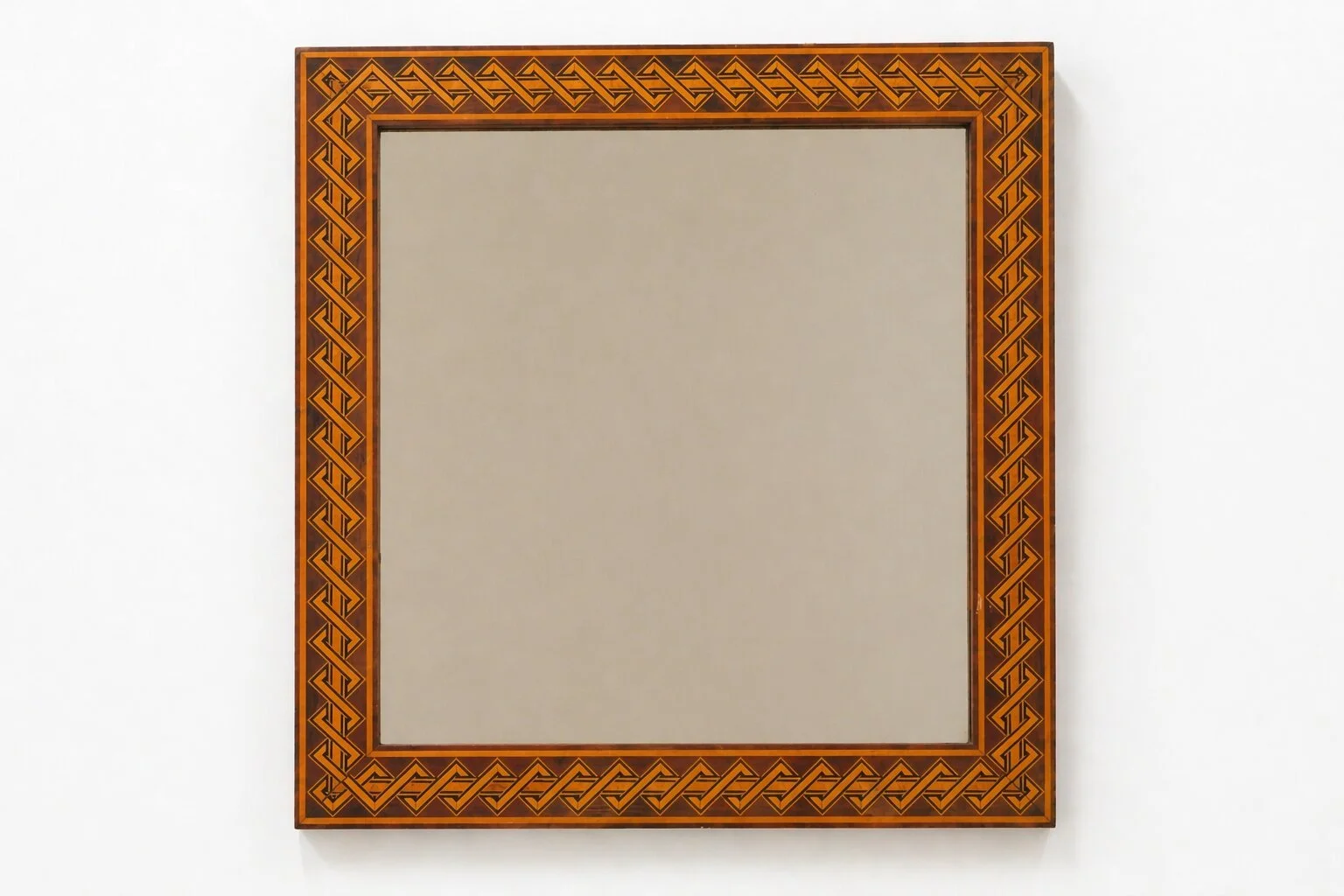 Image 1 of 15
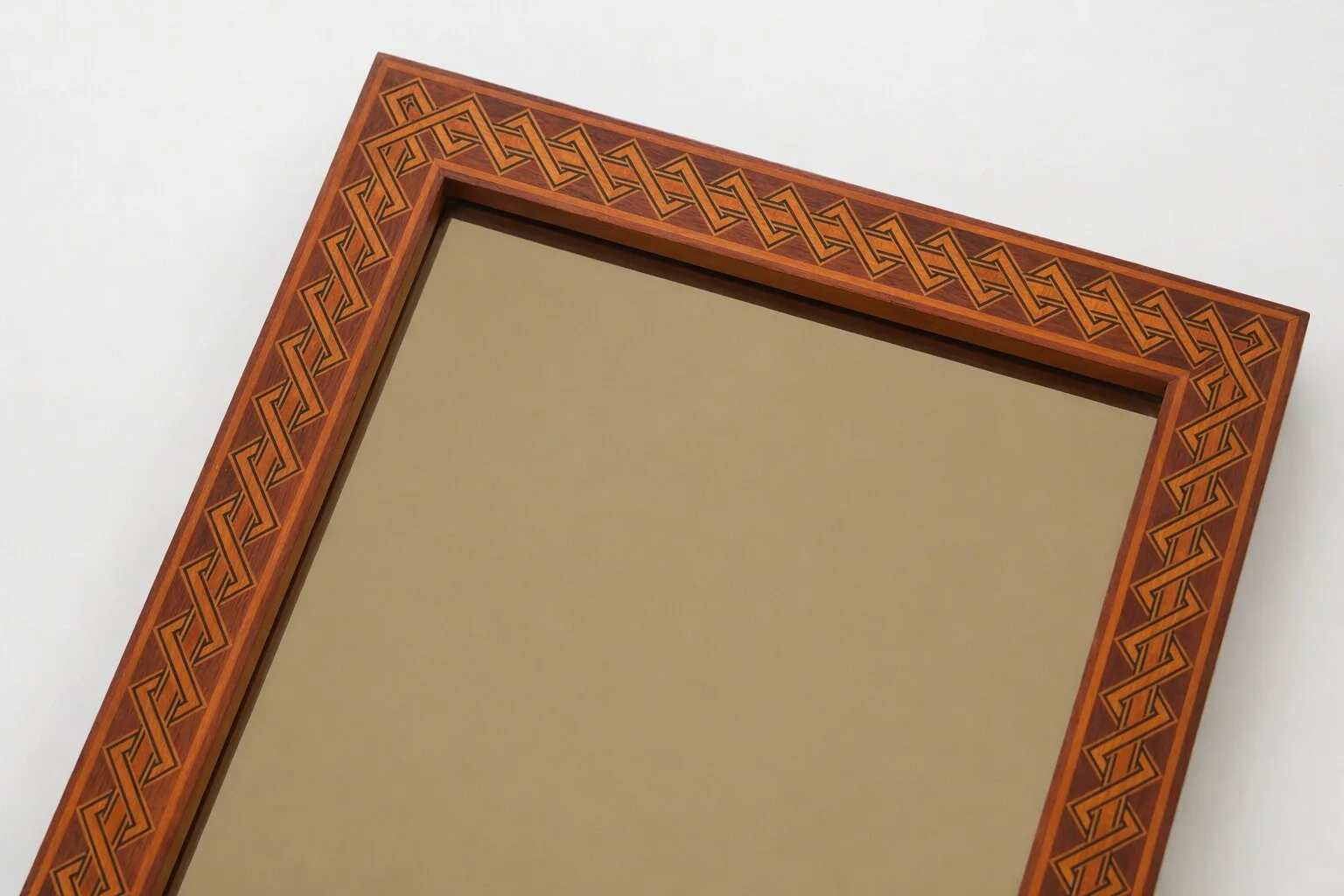 Image 2 of 15
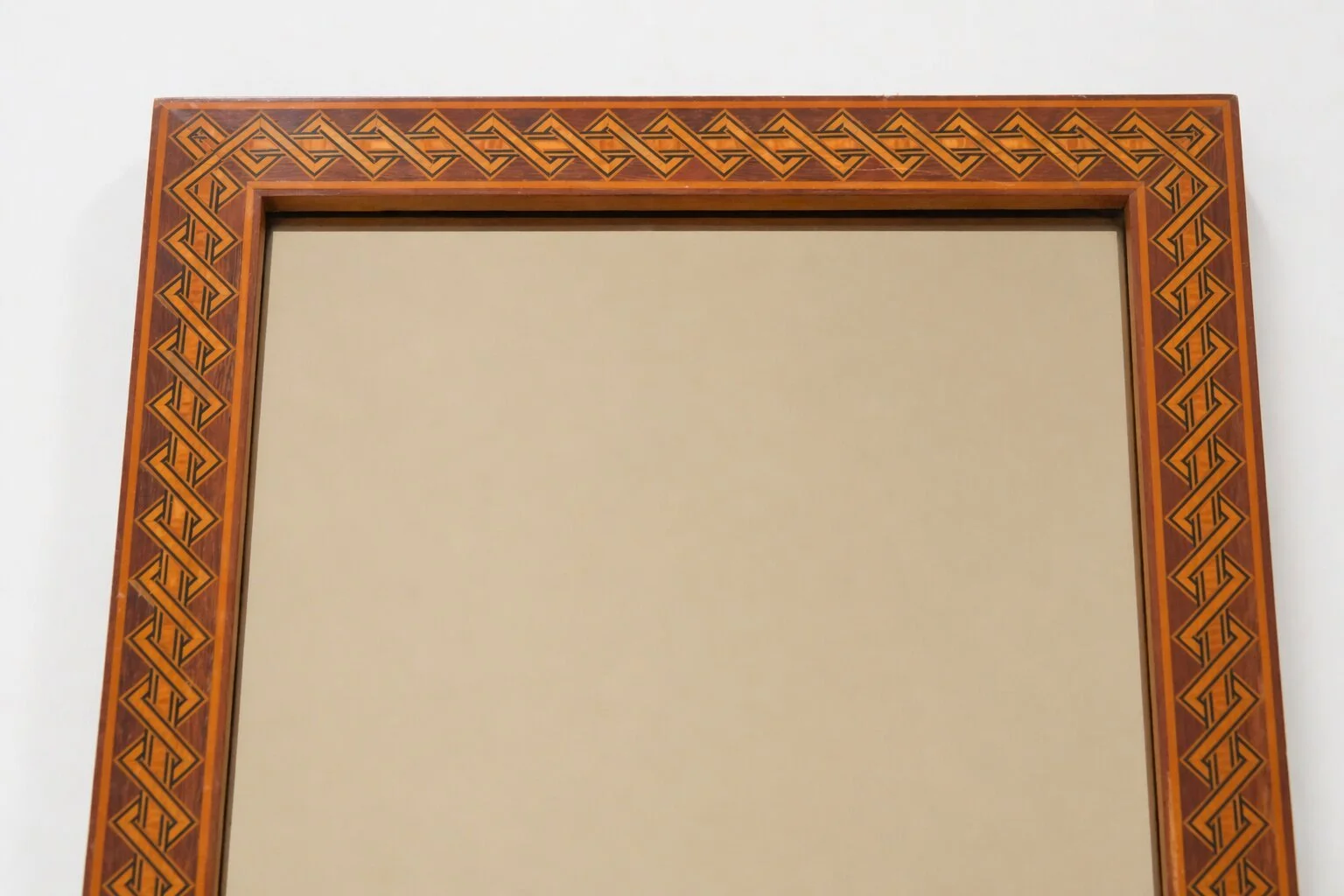 Image 3 of 15
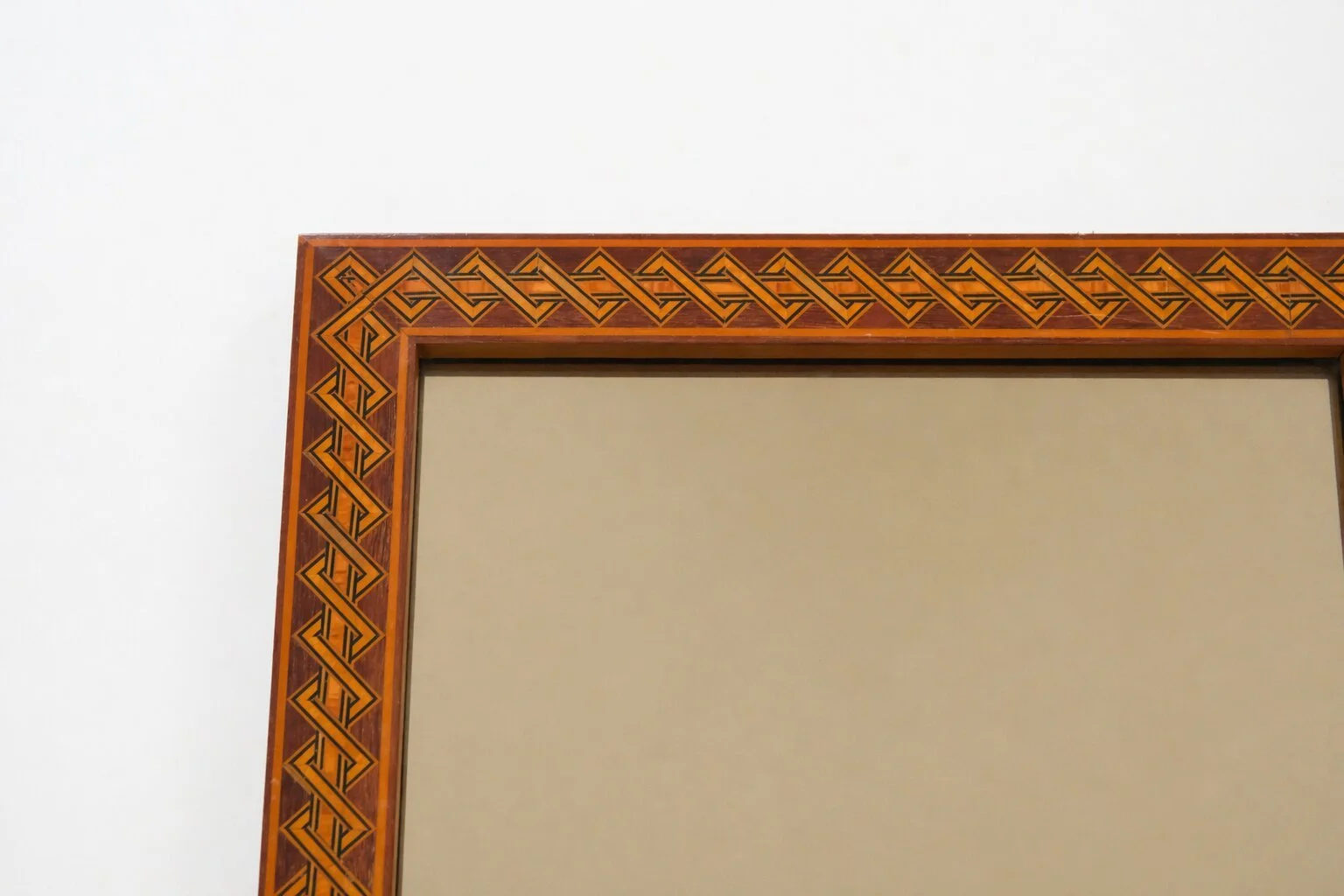 Image 4 of 15
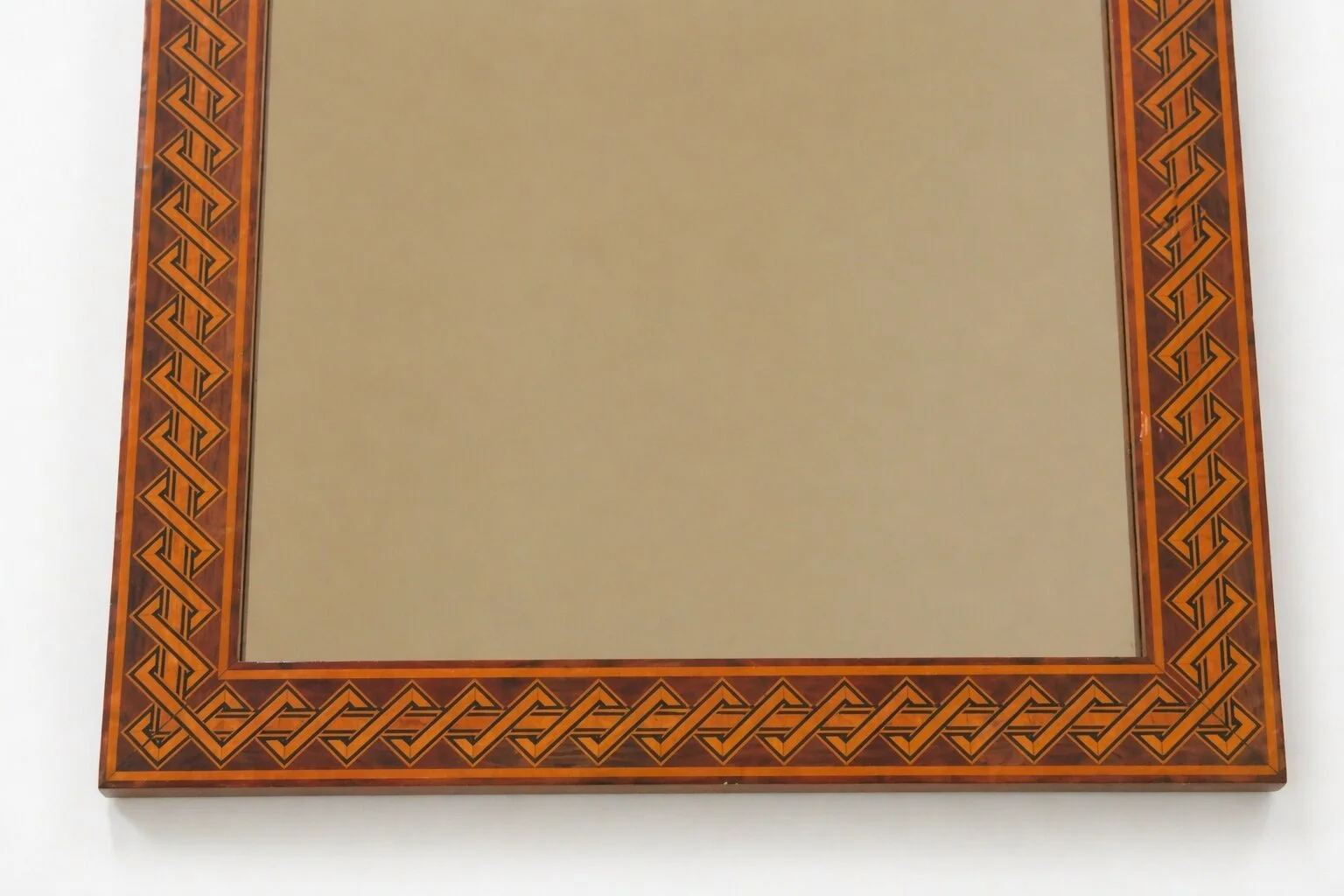 Image 5 of 15
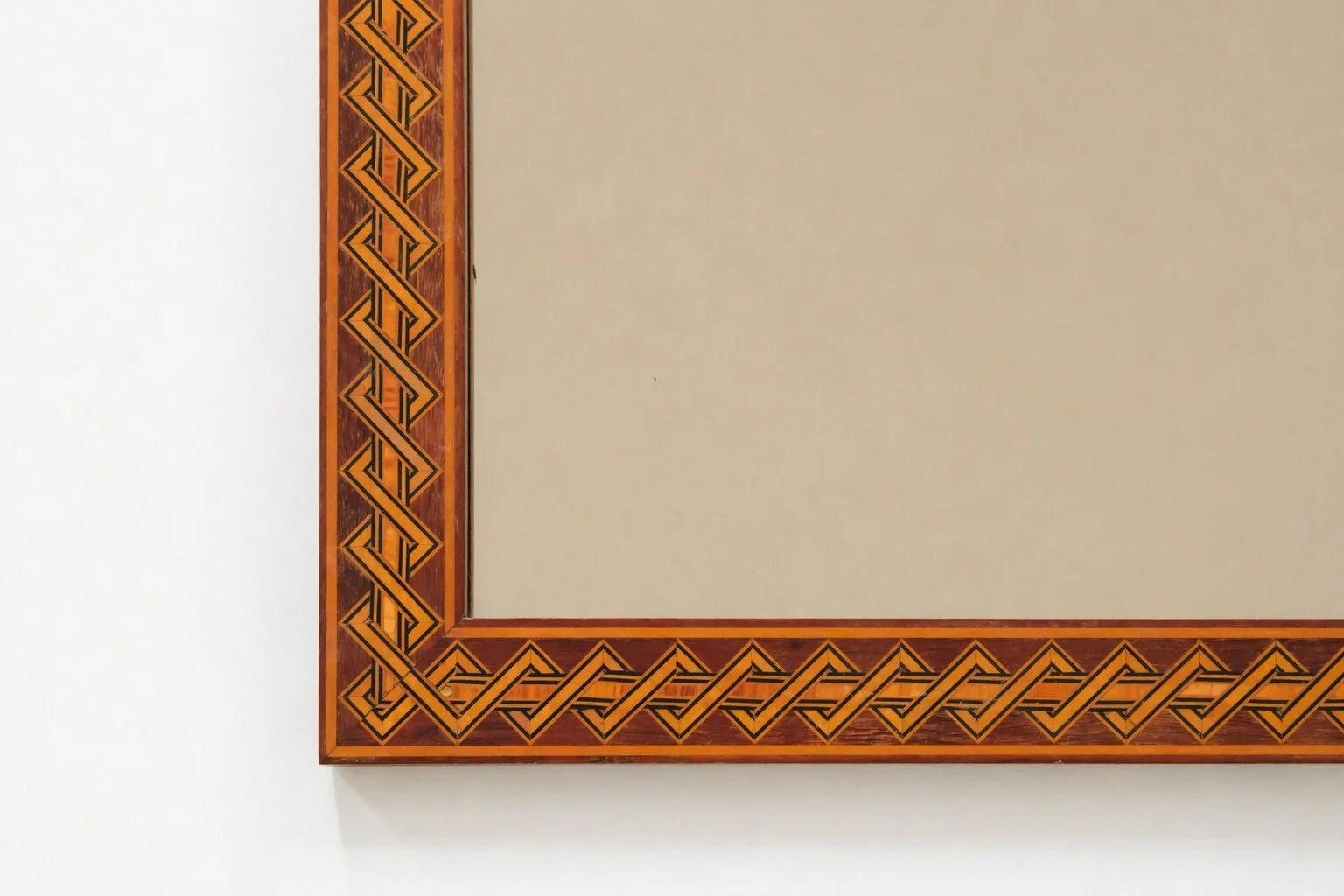 Image 6 of 15
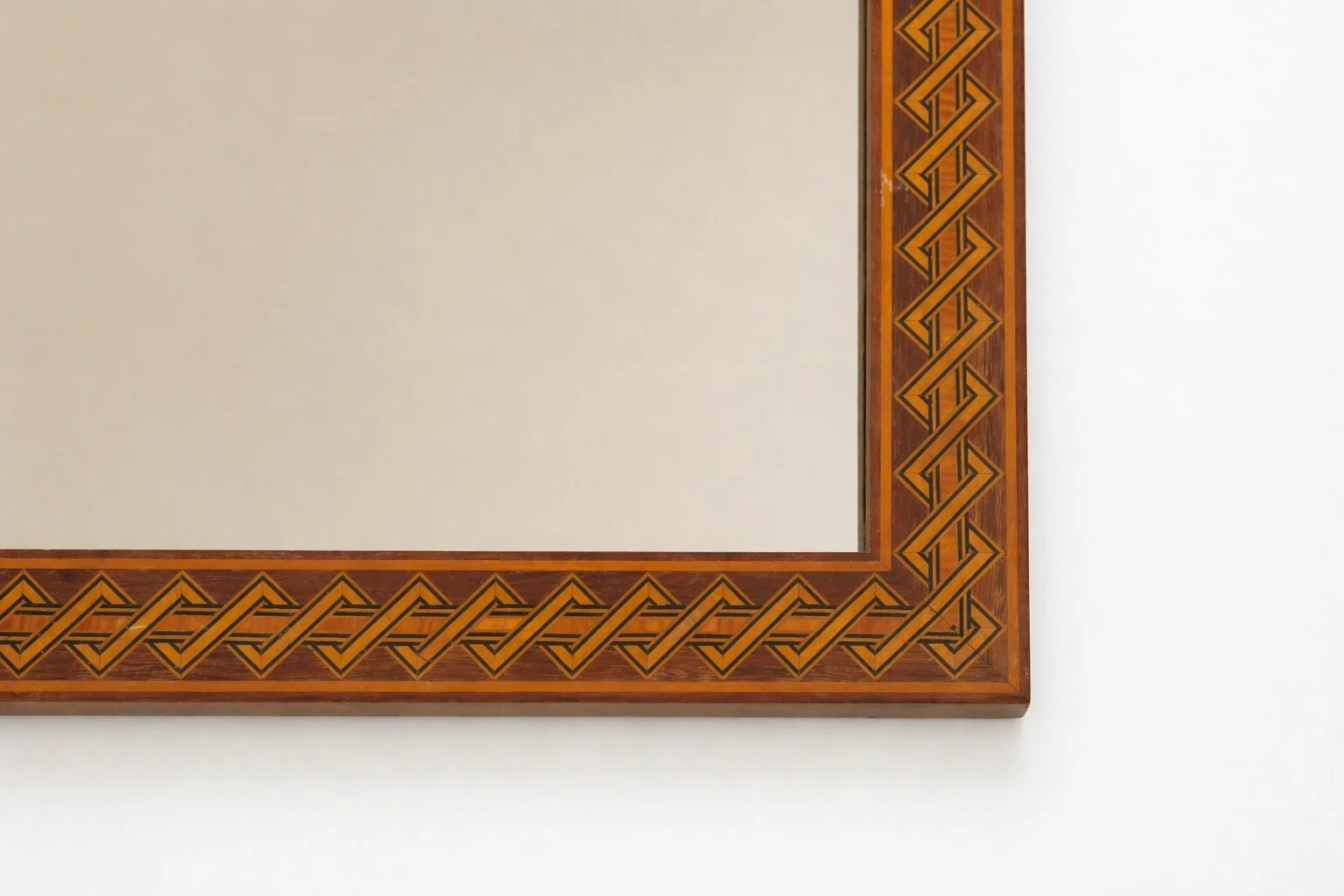 Image 7 of 15
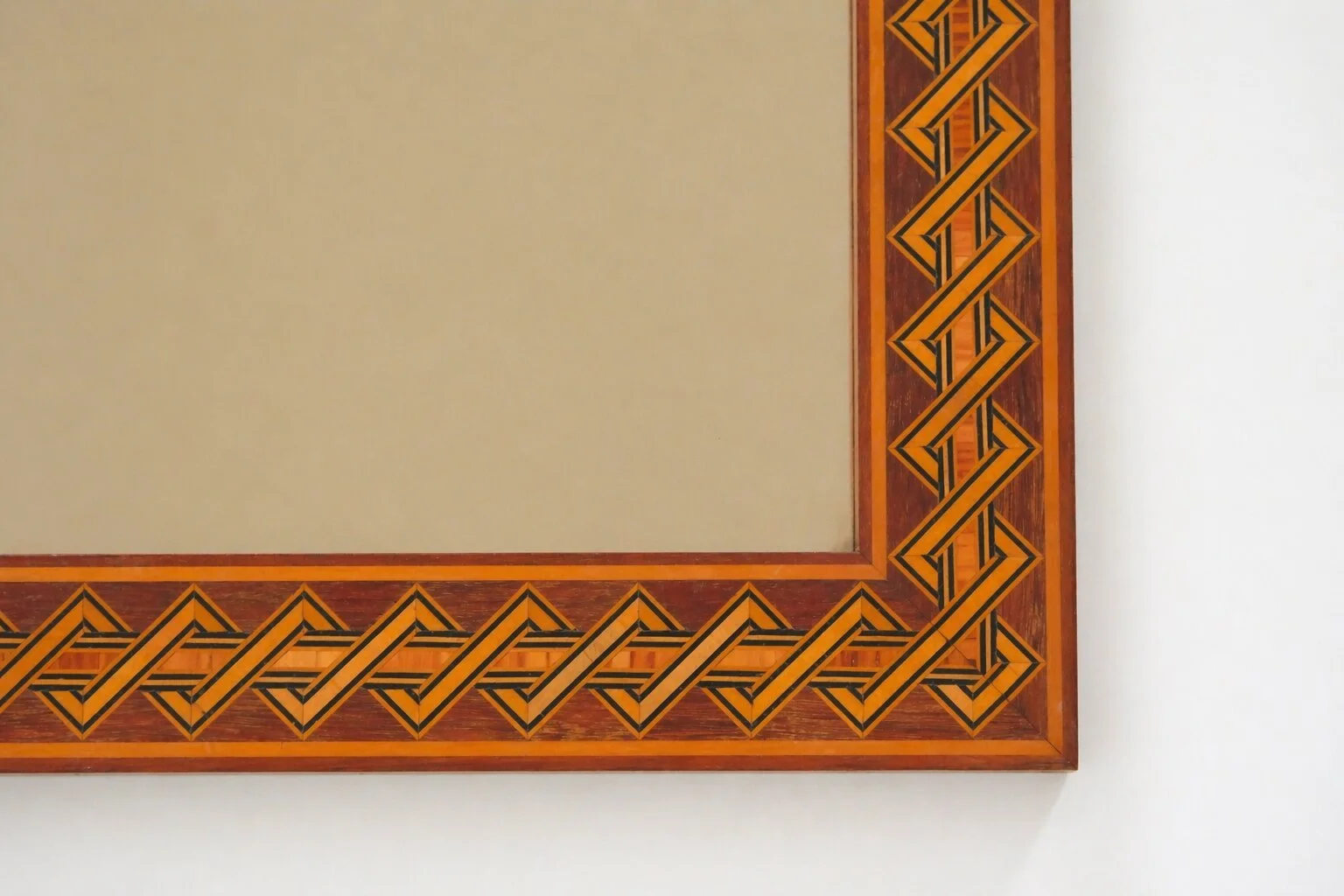 Image 8 of 15
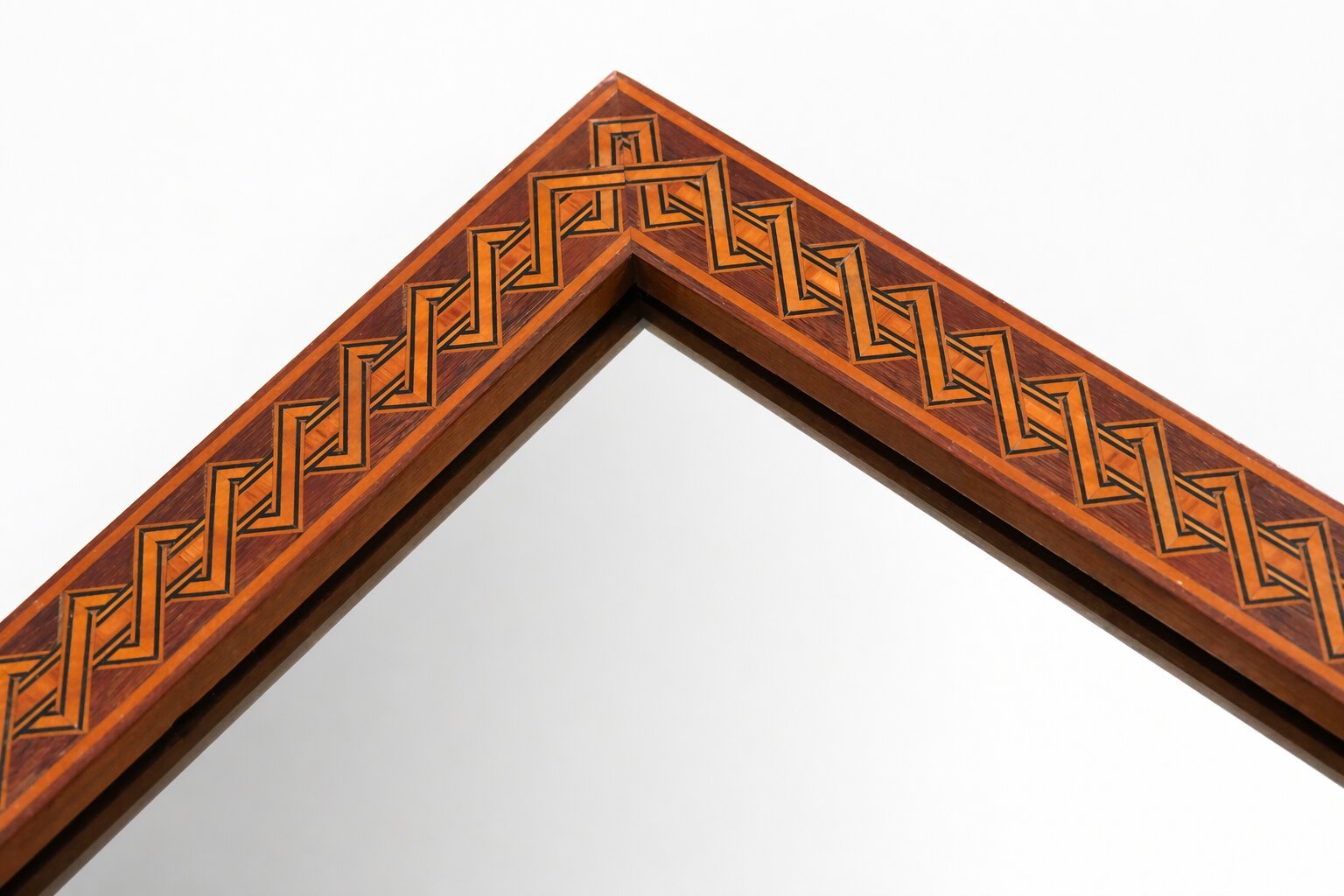 Image 9 of 15
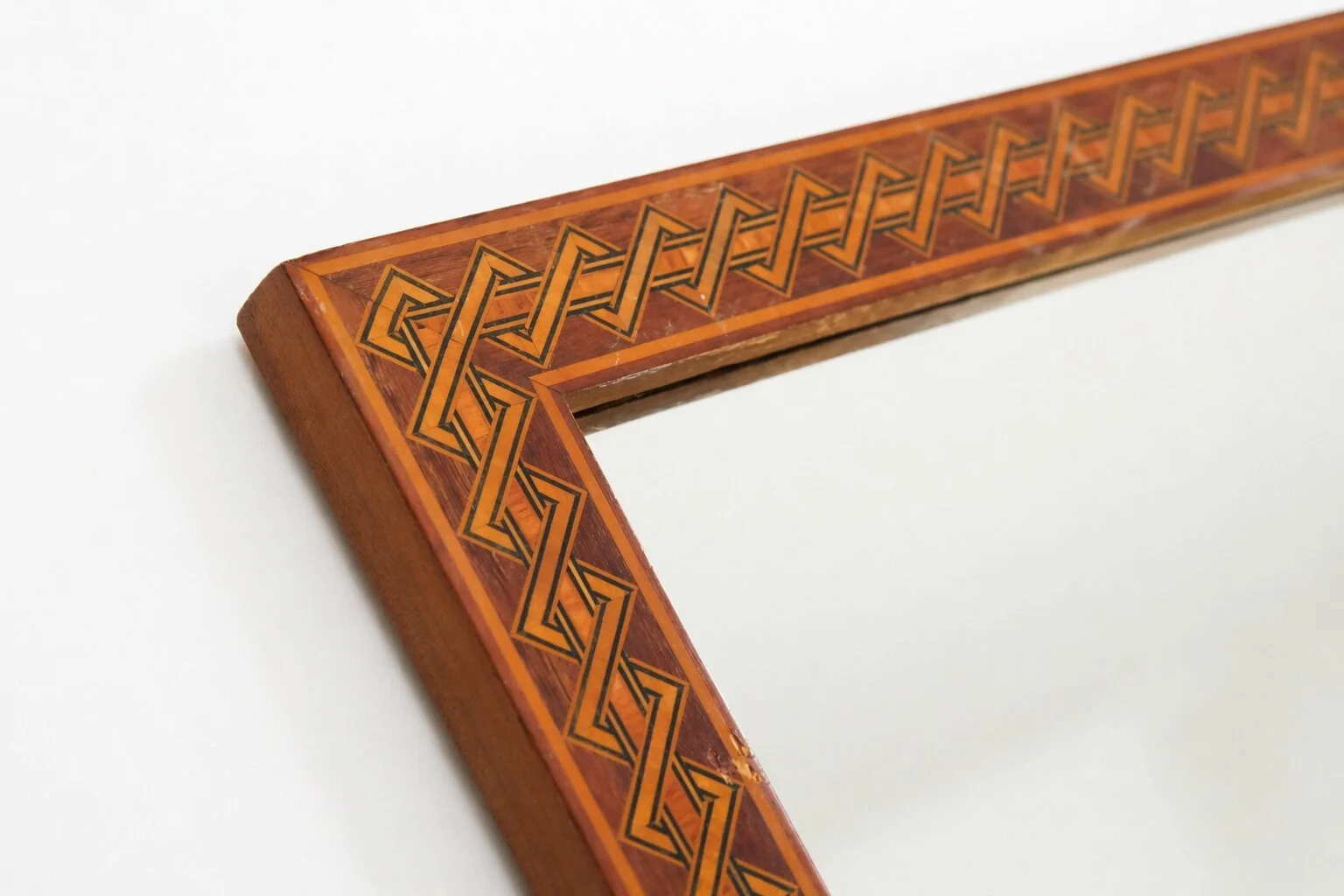 Image 10 of 15
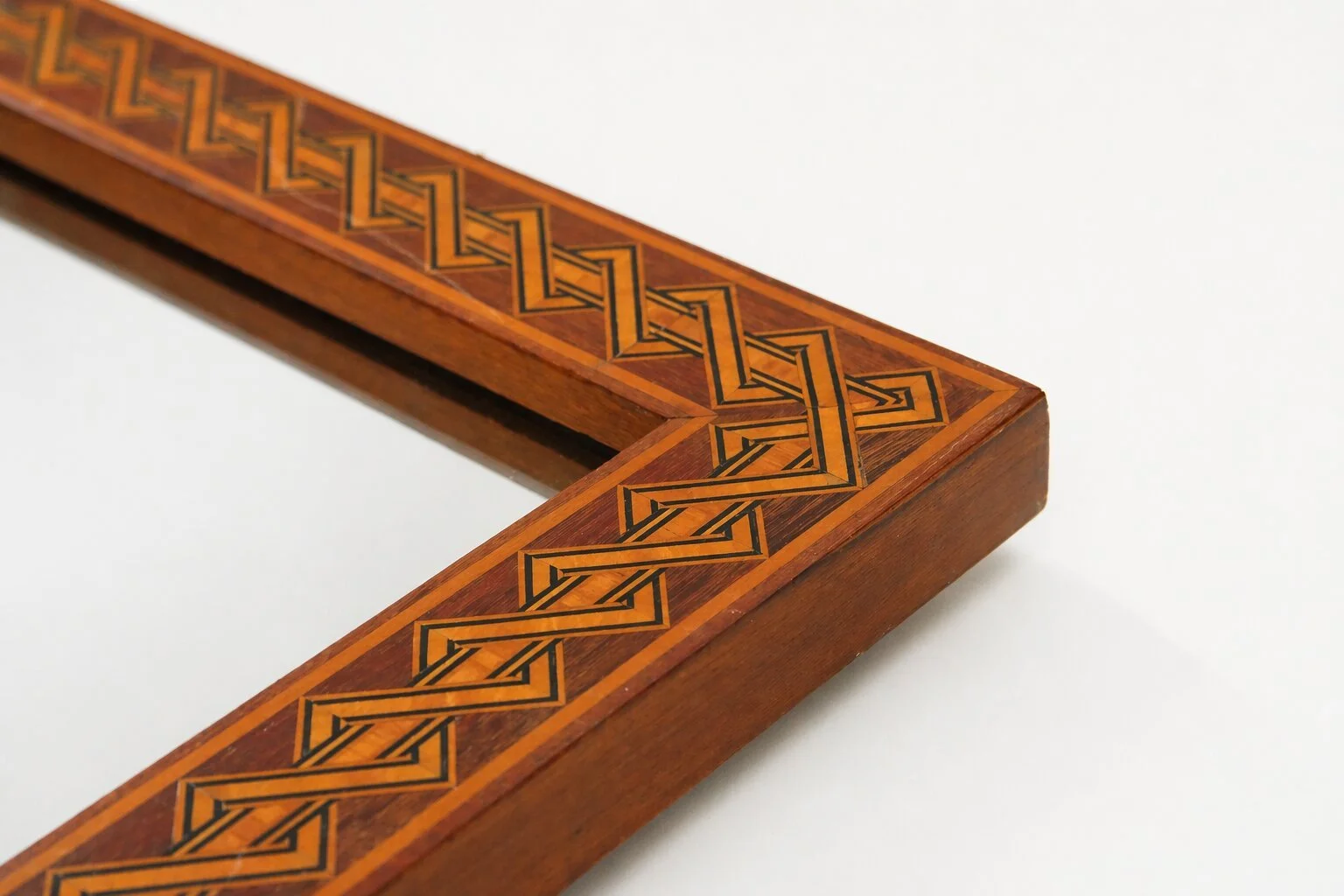 Image 11 of 15
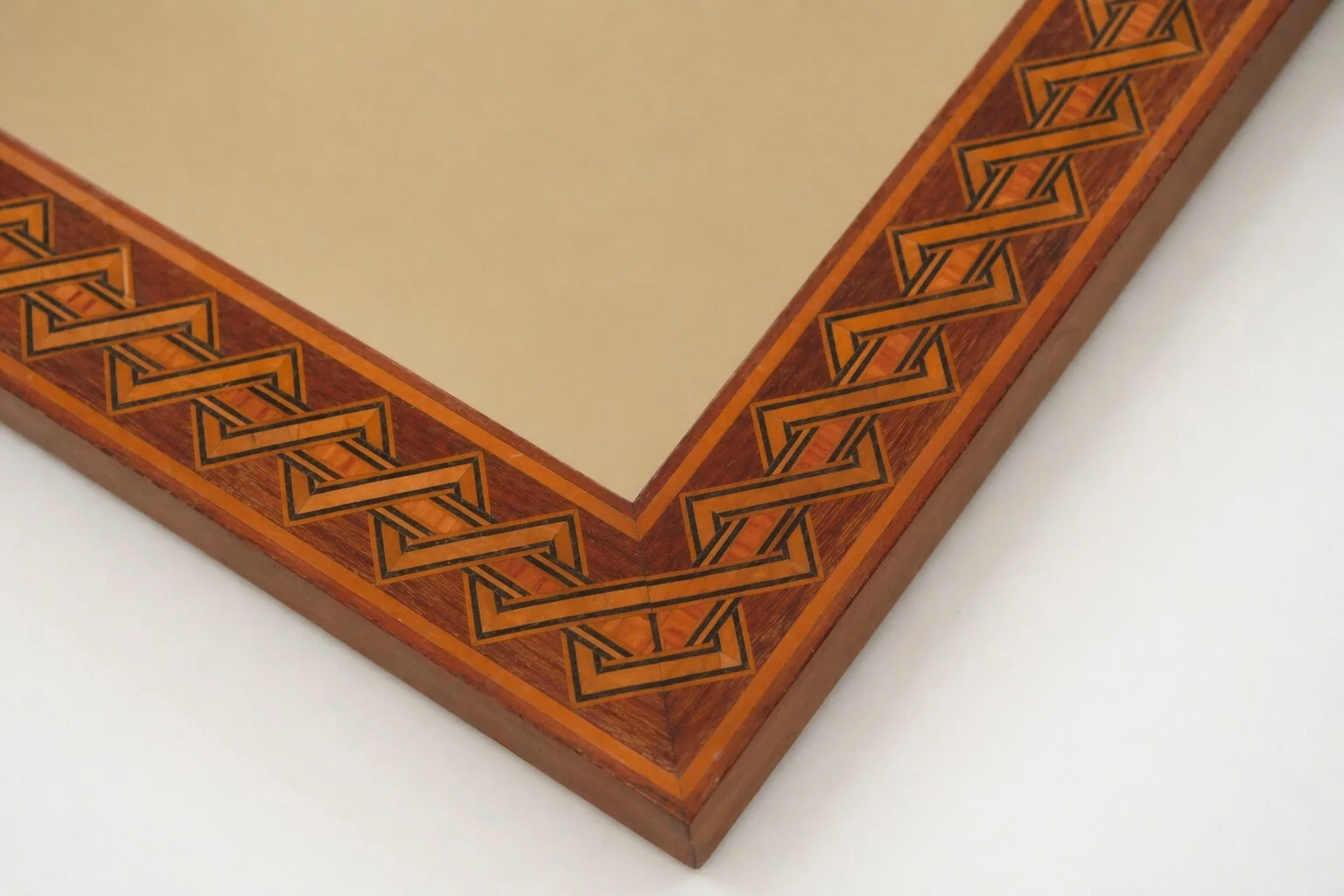 Image 12 of 15
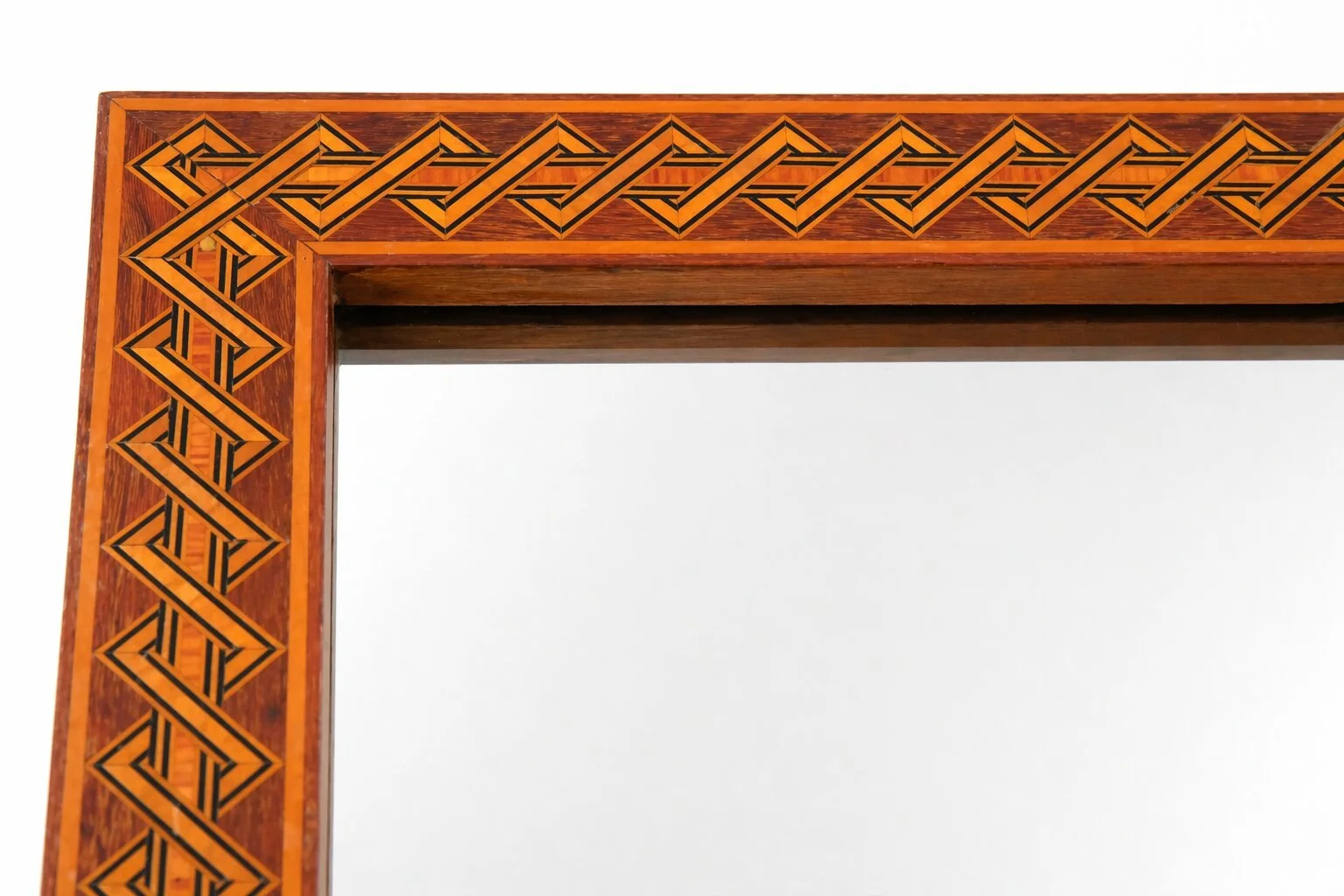 Image 13 of 15
 Image 14 of 15
 Image 15 of 15